For an eco-aesthetic of Mediterranean topographies. Re-readings of French travelogues of the long 19th century
Hannah Barmüller specialising in Romance Studies
The dissertation project deals with Mediterranean topographies from a literary studies perspective - in other words, with the literary-aesthetic representation of real spaces and places that are (re-)constructed in texts, transforming existing discourses and creating new ones. The study examines travelogues from the long 19th century, whose authors explore the port cities of North Africa and the Levant as well as the desert hinterland with its transport routes, trade routes, pilgrimage routes and oases. The work focuses on the modes of writing with which the Mediterranean topographies are aestheticised, as well as their interweaving with discourses on interspecies relations and the (non-)human environment, which, in addition to their trans-Mediterranean significance, are also examined in terms of their global reach.
Advisor: Steffen Schneider

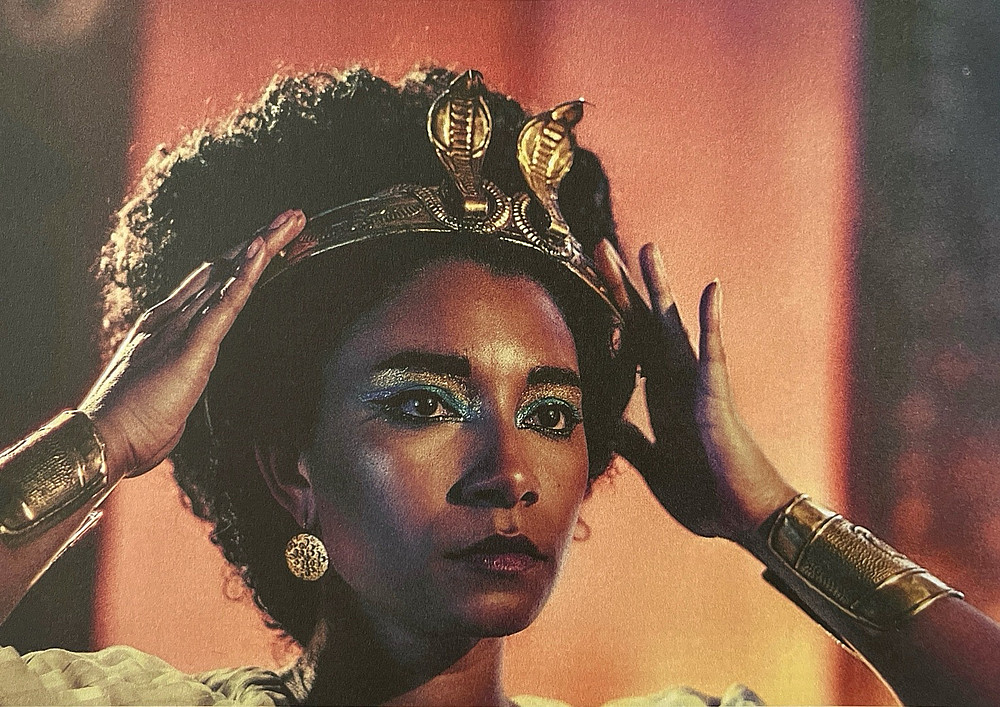
Antiquity in the Modern Era: The Case of ‘Cleopatra’
Sladjana Domuz, Departement of Classics
The dissertation analyses the multifaceted reception of the historical figure of Cleopatra. The focus is on examining her portrayal in literature, film and art, as well as the question of the extent to which these representations influence contemporary perceptions of power, gender and political strategy. The representations, which range from Shakespeare to Hollywood to pop culture, convey a multi-layered image that far exceeds the historical facts. The aim of this work is to systematically document the changing symbolism of Cleopatra in cultural memory. The dissertation project places particular emphasis on the extent to which media representations contribute to the construction of historical narratives and the functions these narratives perform in contemporary social discourse.
Advisor: Gabriele Koiner
The good, the bad, and Cicero. Power Networks in Rome in the 1st Century B.C.
Lukas Großegger, Departement of Classics
Ego vero quem fugiam habeo, quem sequar non habeo. (Att. 8,7,2) Thus writes Cicero to his friend Atticus, undecided as to whether he should side with Pompey or Caesar in the civil war. Ultimately, caught up in his vacillation, he fails to take a stand in time and finds no place in either camp. This lack of decisiveness condemns Cicero—who so strived for social standing and prestige—to be unable to participate in the political process, forcing him to wait and hope for the clemency of the victor.
This alone makes it clear that political interest groups in the first century BCE were of great importance for the realization of personal ambitions, social standing, and political influence. Therefore, it seems worthwhile to examine these networks of power more closely and analyze them on a case-by-case basis.
The sources that seem useful for this purpose extend far beyond epistolary literature, which by no means makes the analysis any easier, especially since, on the one hand, the sheer volume of information that has come down to us must be taken into account, and on the other hand, the texts must always be critically evaluated within the context of day-to-day political affairs.
Advisor: Margit Linder
![altes Bild mit vielen Menschen Cicero deckt Catilinas Pläne auf. ©https://www.worldhistory.org/image/4532/cicero-denounces-catiline/ [23.7.2025]](https://static.uni-graz.at/fileadmin/_files/_project_sites/_transmediterranean/Lukas_Grossegger_Doktorand_Bild.jpg "©https://www.worldhistory.org/image/4532/cicero-denounces-catiline/ [23.7.2025]")
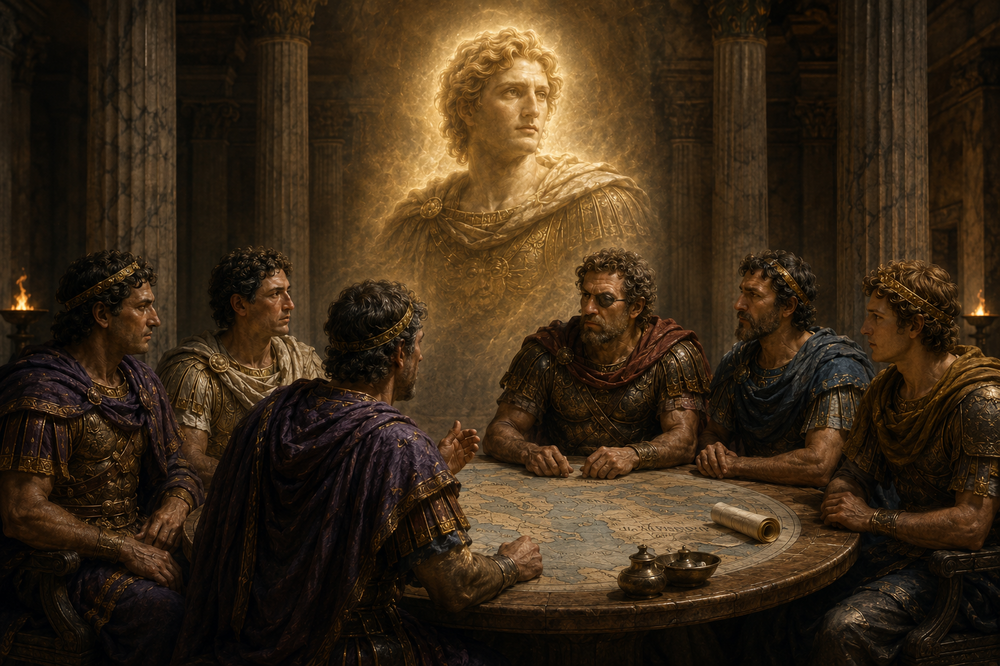
Aristocratic Alliances and Networks of Power in the Turmoil Following the Death of Alexander the Great
Alexander Mostögl, Departement of Classics,
The turbulent period following the death of Alexander the Great provided the more ambitious members of the Macedonian ruling elite with fertile ground for political and military opportunities. This dissertation project aims to examine the relationships and shifting alliances among the Diadochi and to explain how some actors managed to rise rapidly during this period, while others failed despite holding the highest leadership positions. By analyzing the available sources on as many individuals involved in the succession conflicts as possible, the aim is ultimately to identify and describe patterns within the structures of the Macedonian elite of this era.
Advisor: Margit Linder
An Interpretive Commentary on Avian's Fables
Christopher Poms, Departement of Classics
From its intellectual origins in Bronze Age Mesopotamia to Avian’s collection of verse fables from late antiquity (ca. 400 CE)—the subject of this dissertation project—the ancient fable “wandered” through numerous languages and cultures of the Mediterranean region, thus representing, as it were, a trans-cultural and trans-Mediterranean literary genre. On its “journey,” the ancient fable has acquired a wide variety of semantic connotations. The aim of this dissertation project is to interpretatively analyze Avian’s collection of fables. To this end, the form of an interpretive commentary was chosen, which, in contrast to a lemmatized commentary, offers a coherent text with detailed annotations.
Advisor: Ursula Gärtner
![Castle, boat, people ©Wolfenbüttel, Herzog August Bibl., Cod. 30.12, Aug. 2°, fol. 36r. [URL: https://diglib.hab.de/mss/30-12-aug-2f/start.htm]](https://static.uni-graz.at/fileadmin/_files/_project_sites/_transmediterranean/Juliana_Reinisch_Doktorantin_Bild_zum_Text.jpg "Juliana Reinisch - Doktorandin des Schwerpunktbereichs Transmediterrane Verflechtungen ©Wolfenbüttel, Herzog August Bibl., Cod. 30.12, Aug. 2°, fol. 36r. [URL: https://diglib.hab.de/mss/30-12-aug-2f/start.htm]")
Varying images of the 'heath'
On the representation of the pagan and oriental in Wolfram von Eschenbach's Willehalm, the Arabel Ulrichs von dem Türlin and the Rennewart Ulrichs von Türheim
Juliana Reinisch specialising in German Medieval Studies
The Orient of medieval narrative texts generally represents an alternative world to the familiar Western-Christian cultural space, separated by the sea and already based on ancient narrative traditions. The most essential and clearly judgemental criterion of difference is usually religion, here the 'crists' on the other side of the sea the 'pagans'. At the same time, however, literary interrelationships between the two cultural areas are also evident and their forms of representation prove to be quite dynamic in both intra- and intertextual comparison. The aim is to trace these interdependencies and dynamics.
Advisor: Julia Zimmermann
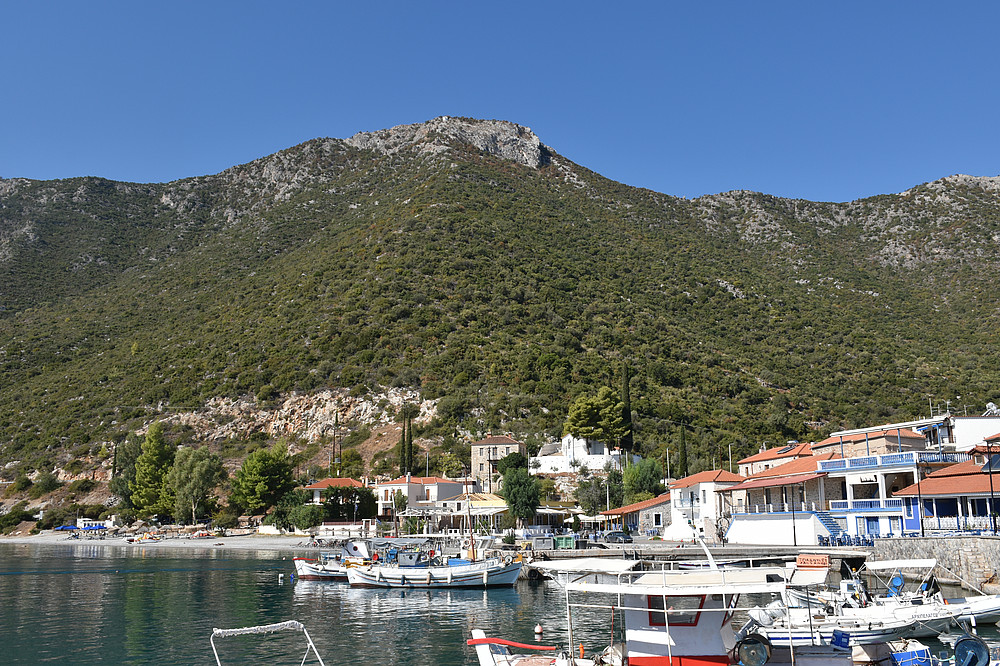
Prasiai
Topography and history of the polis from archaic to Hellenistic times
Hans W. Scherer, Field of study: Archaeology
The dissertation examines the development of the ancient city of Prasiai from the 7th to the 3rd century BC. Located on the east coast of the Peloponnese, Prasiai was the scene of an eventful history, characterised by the influences of Sparta and Argos. It forms the capital of a micro-region with links to sites on the high plateau of the Parnon Mountains and across the sea in the Gulf of Argos. Through archaeological excavations and topographical work, the project aims to gain a comprehensive understanding of the structure and development of the city and, subsequently, of the relationship between Sparta and the cities in the mountains and on the coast.
Advisor: Peter Scherer
Cleopatra VII: Between History and Gender. A Historical Analysis of the Reception of German Biographies (1864–2025)
Melanie Spangler, Departement of Classics
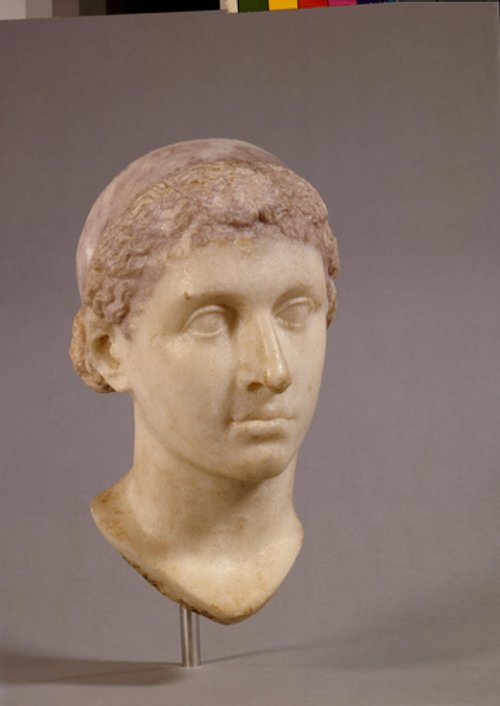
This dissertation project is dedicated to a historical reception analysis of biographies of Cleopatra VII from the German-speaking world, beginning with the earliest relevant account from 1864 and extending to the most recent publication in 2025. The focus is on the question of how the historiographical and narrative construction of Cleopatra has changed over this period and to what extent these changes can be attributed to political, social, and gender-historical contexts.
The study examines selected scholarly biographies that treat Cleopatra as a central figure and analyzes them in the sense of a comparative longitudinal study along defined key categories (including characterization and evaluation, narrative and argumentative strategies, and reliance on ancient sources). The portrayals are systematically related to key contextual factors such as political orders, legal changes in the area of women’s rights, the various phases of women’s movements, and paradigm shifts in historical scholarship.
The aim is to reveal diachronic processes of transformation in the portrayal of Cleopatra and to demonstrate how changes in gender order, political participation, and social role models are reflected, reproduced, or critically challenged in the biographies. In this way, the dissertation understands German-language biographies of Cleopatra as part of a history of reception.
Advisor: Margit Linder
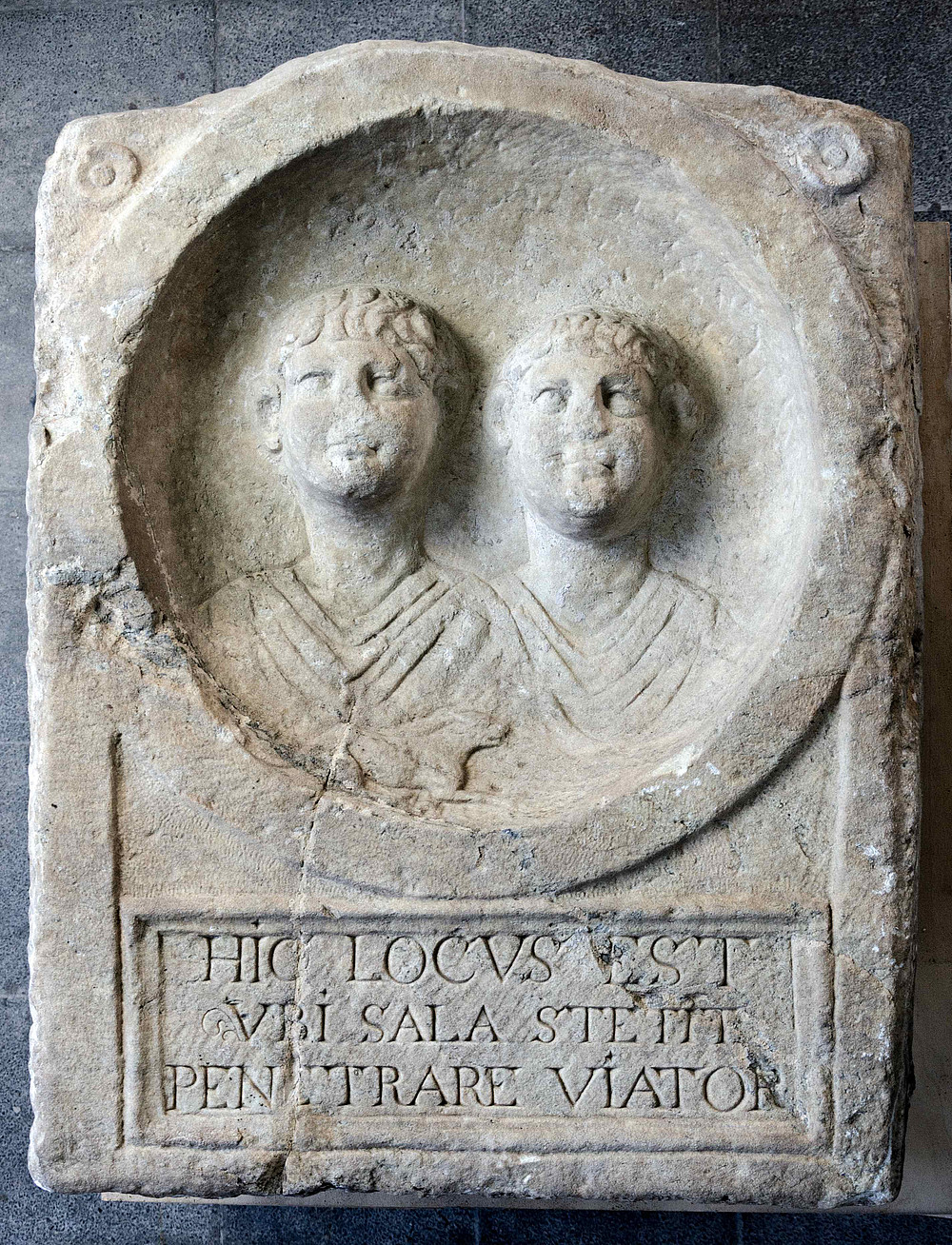
Children of the Provinces: Space and Spatiality of Childhood in Raetia, Noricum, and Pannonia
Viktoria Zehentner, Departement of Classics, Field of Study: Archaeology
Space and Spatiality of Childhood in Raetia, Noricum, and Pannonia
Children were an integral part of everyday life and social life in antiquity. This dissertation addresses this topic and analyzes the traces of children in the Roman provinces of the Eastern Alps from the Imperial period through Late Antiquity. The focus is on the physical and social living spaces shaped, organized, and utilized by children. Based on burials and depictions of children, as well as objects related to the world of childhood, the study examines the space they occupied in daily life and in death, how this space was structured, and what insights can be drawn about the social structures in the provinces. By comparing this with childhood in Rome, the study also examines Rome’s influence in the provinces and its fusion with local traditions as they relate to family structures. The dissertation aims to paint a more inclusive picture of ancient provincial society and to systematically analyze the archaeological legacy of children in the Eastern Alps region from a social-archaeological perspective.
Advisor: Matthias Grawehr