



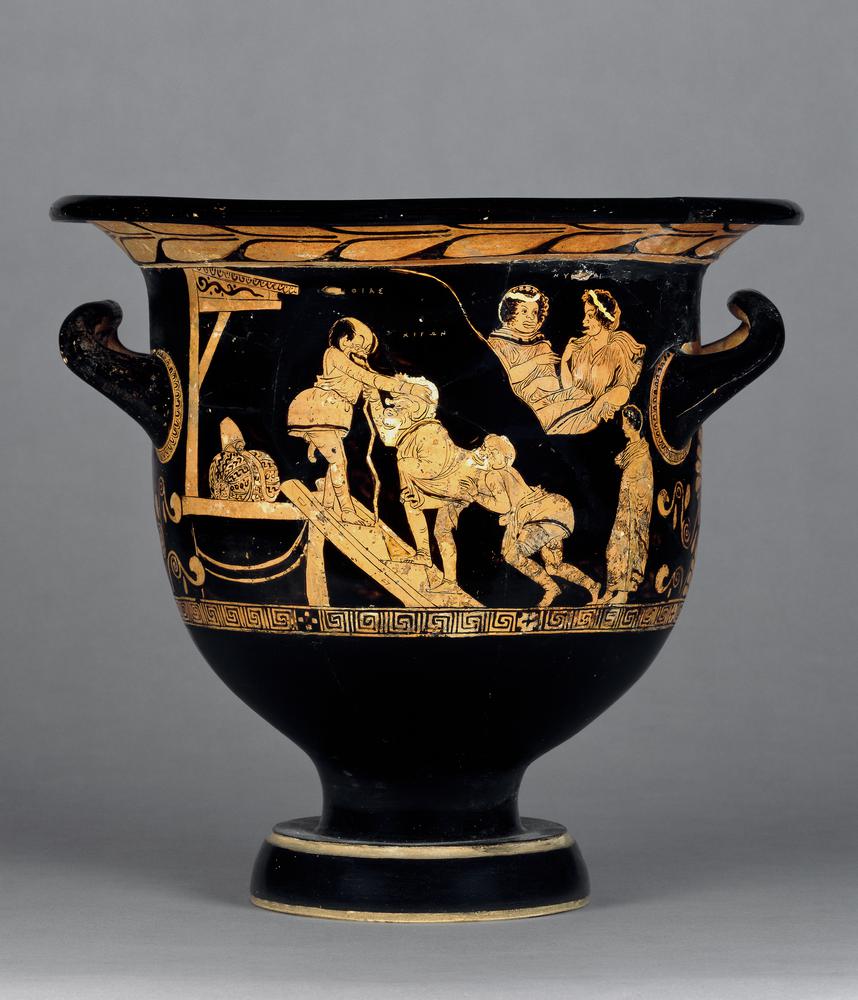
‘Sicilian dogs and Spartan pestles’. The historical figures in Aristophanes’ comedies
Stefan Hofbauer, Institute for Classical Studies, Research Area: Ancient History
In the fifth century BC, comedy emerged as a distinct theatrical form alongside tragedy and has undergone continuous development ever since. Whilst New Comedy (from the fourth century BC onwards) focused on humorous character types, Old Comedy was characterised by political allusions as well as caricatures and parodies of real-life figures. Of the more than 500 plays of Old Comedy that were performed, only eleven have survived in full or almost in full – and they all come from a single author: Aristophanes. These plays were performed in the period between the Peloponnesian War and the Corinthian War and contain numerous jokes, ranging from biting to crude, at the expense of the politicians in power at the time – as well as artists, philosophers and other public figures.
The aim of this doctoral project is a prosopographical study of the historical figures mentioned in the eleven surviving comedies. The nearly 300 men and women were analysed in terms of their role within the comedies and compared with parallel sources, scholia and fragments in order to paint as objective a picture as possible of these individuals.
Supervisor: Margit Linder